
GFBR 2026 Opens Call for Participants and Presenters on Digital Footprints and Health Research | Closes Soon


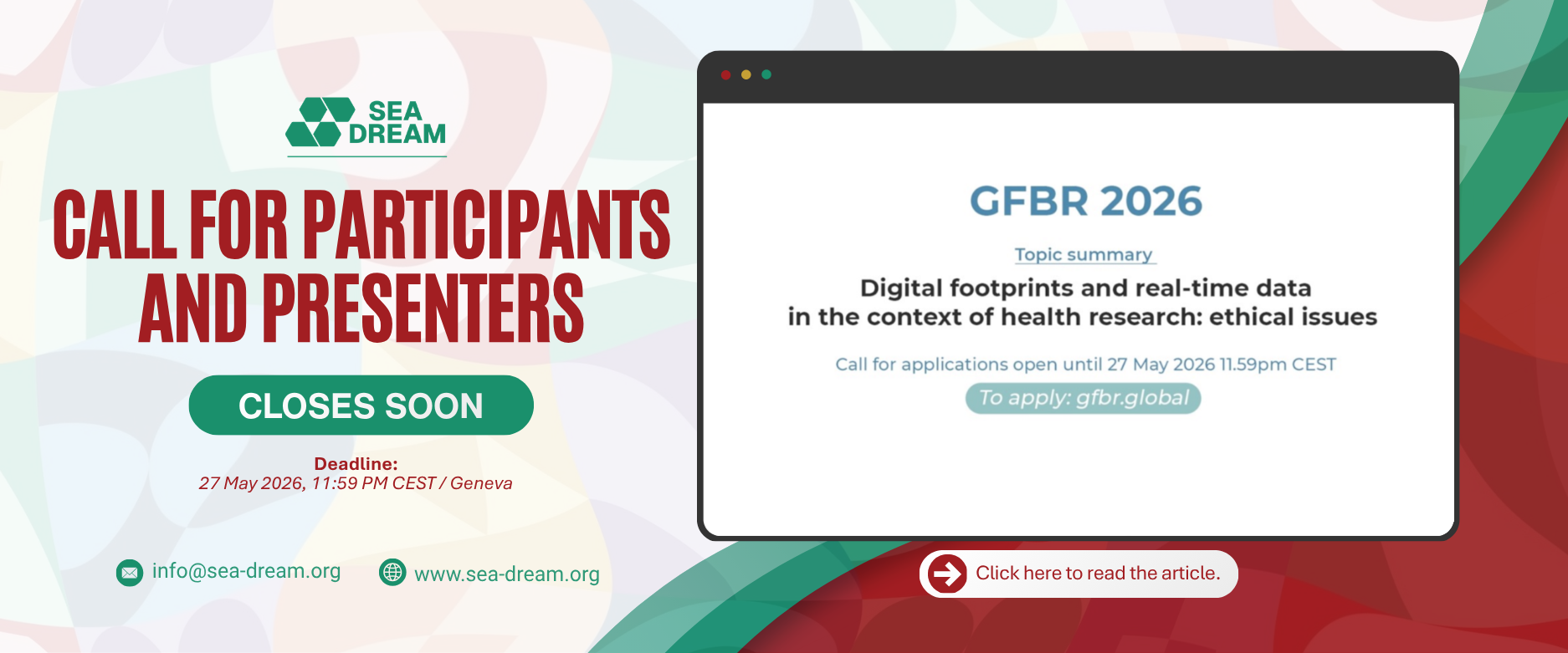
Deadline: 27 May 2026 at 11:59 PM CEST/Geneva
The Global Forum on Bioethics in Research (GFBR) has opened applications for its 2026 meeting, which will take place on 17–18 November 2026 in Bangkok, Thailand. This year’s forum will focus on “Digital footprints and real-time data in the context of health research: ethical issues,” with particular attention to low- and middle-income country (LMIC) contexts.
GFBR 2026 will explore the ethical challenges surrounding the collection and use of digital footprints and real-time data in health research, including data generated through smartphones, wearable devices, social media platforms, consumer purchases, and internet searches. The meeting aims to bring together researchers, policymakers, ethicists, journalists, clinicians, and other stakeholders for interactive discussions, networking, and mentorship opportunities.
Applications are open for participants, presenters, and journalists from LMICs. Successful applicants from LMICs may receive funding support covering travel, accommodation, and visa costs.
Interested applicants may apply online as either a participant or presenter through the links below:
The forum welcomes presentation proposals in the form of real-life case studies, conceptual papers, normative papers, and policy-related papers. Key themes include data quality and equity, data sovereignty, consent and privacy, and ethical governance in the use of digital footprints for health research.
Note: Places are awarded on a competitive basis. Successful applicants from low- and middle-income countries (LMICs) may receive funding support to cover travel, accommodation, and single-entry visa expenses. Participants are expected to arrange and cover their own travel insurance costs.
Applications must be submitted online in English before Wednesday, 27 May 2026 at 11:59 PM CEST/Geneva.
SEA DREAM is supporting outreach efforts for GFBR 2026 to encourage participation from Southeast Asia and other LMIC contexts.
For more information and application links, visit: https://www.gfbr.global/news/gfbr-2026-call-for-applications/ or contact gfbr@who.int.
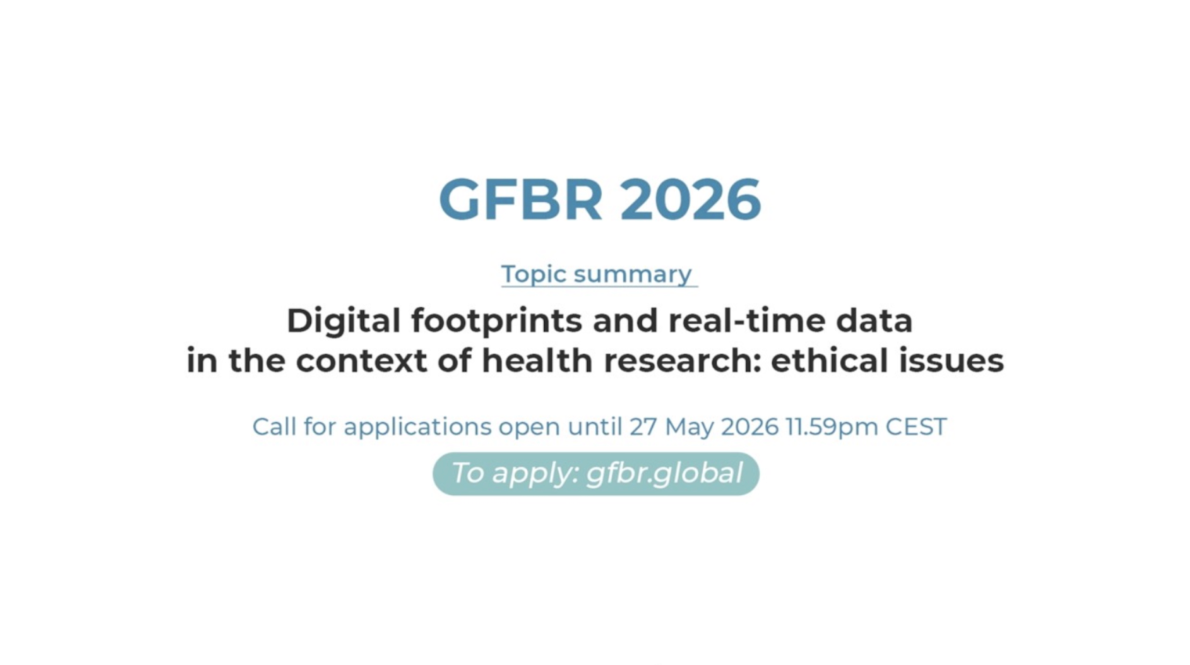
GFBR 2026: Digital Footprints and Real-Time Data in the Context of Health Research: Ethical Issues
This video provides an overview of the Global Forum on Bioethics in Research (GFBR) 2026 topic and accompanies the call for applications to attend the meeting. Speakers highlight key themes and questions addressed in the background paper.
Forum Topic Summary:
Digital footprints are the unique trail of data individuals create, either actively or passively, when using the internet or connected devices. Wearable devices, smartphones, social media platforms, consumer technologies, internet searches, and artificial intelligence prompts can generate vast quantities of data about individuals’ behaviours, movements, physiological states, and social interactions. As more data than ever is being collected about humans across multiple directly and indirectly health-related indicators and determinants, the boundaries of what constitutes ‘health data’ are both expanding and becoming blurred.
Digital footprints and real-time data are generally collected by non-health sectors, especially commercial entities, for other primary purposes. Nonetheless, these data may become health-relevant when linked with other variables or when hypothesised to be proxy indicators of health outcomes. They are increasingly leveraged in health-related research, where they have potential to enhance our ability to understand disease patterns, predict risk, monitor interventions, formulate nudge policies, and inform public health responses. However, these novel data sources may lead to new research approaches that raise distinct ethical and governance issues. The GFBR aims to map the current ethical debates and tensions around the collection and use of digital footprints and real-time data in health research, focusing on the context of low- and middle-income countries (LMICs).
Proponents see the potential for digital footprints and real-time data to transform health-related research in LMICs, whether by offering novel and more accessible approaches to data collection or by enabling data generation where other means of data collection (e.g., electronic health records) are unavailable or inoperable. Critics worry about representativeness and accuracy of these data, and question whether and how we might decide to promote real-time data gathering techniques over traditional approaches, and under what circumstances. These tensions highlight the importance of having a good understanding of the potential ethical challenges that may arise in the use of digital footprints and real-time data for health-related research, and that we have LMIC-centered approaches and frameworks for working through these challenges. Promoting scientifically sound and ethically robust research through sharing and using high-quality data is critical to maximising the potential benefits of health-related research and respecting relevant communities, citizens, and research participants.
GFBR encourages multidisciplinary discussions on how we can share and use data well in a complex, cross-sectoral setting that involves stakeholders who are not traditionally part of the health research ecosystems and research ethics oversight mechanisms (e.g., software developers, corporations). Recognising ongoing resource disparity and digital divides within and across regions that may have different health priorities, the GFBR meeting will identify existing use cases of digital footprints for health research, explore current ethics review models, identify unresolved ethical questions or stubborn problems, and propose governance solutions that are ethically justified, pragmatically operationalisable, and which may allow us to radically reimagine how we define and ethically approach the use of digital footprints and real-time data in health research.

Article and Resources
Interesting Articles


SEA DREAM Grant Conditions and Agreement Template Now Available
Review SEA DREAM’s Grant Conditions and Agreement Template to understand the terms, responsibilities, and requirements that apply to SEA DREAM-funded grants.
Preliminary Application Templates and Assessment Questions Now Available
SEA DREAM has uploaded new resources to support applicants preparing their Preliminary Application. The Preliminary Application and Budget templates provided on the website are intended to help applicants organize their information internally
D4H Full Application Orientation Session Materials Now Available
Access the presentation slides and recordings from Sessions 1 and 2 of the DREAM 4 Health 2026 Full Application Submission Orientation Session to support your application preparation and portal submission process.
Singapore-Southeast Asia Fellowship (S-SEAF) to Support SEA DREAM Research Consortia
Announcing the Singapore-Southeast Asia Fellowship (S-SEAF), supported by NRF Singapore and A*STAR, offering up to two years of funded research mobility for PhD researchers within SEA DREAM consortia.
SEA DREAM Policies Now Available
Review the SEA DREAM Documents and Policies that form part of the DREAM 4 Health Grant Conditions and outline the requirements, responsibilities, and standards for applicants and future grant recipients.

Get In Touch
Subscribe To
Our Newsletter
Stay up to date with our latest funding,
news, events, and announcements.